

The Uncomfortable Truth About Wildcrafted vs. Pool-Grown Sea Moss
Quick answer: Wildcrafted sea moss is gathered by hand from the open ocean, where it grows on its own along the coastline. Pool-grown sea moss is farmed in pools or tanks, which is faster and cheaper. To tell them apart, ask the brand where it was harvested, what species it is and what it's tested for, then check the color, smell, texture, salt and how it soaks. CGI-Green sea moss is Eucheuma cottonii, wildcrafted and hand-harvested in St. Lucia and the surrounding Caribbean, traditionally sun-dried and third-party tested.
Most sea moss on the market isn't labeled with how it was grown. Here's what a family that has worked with sea moss for more than 80 years wants every buyer to know, and how to check for yourself.
Sea moss has become a big business. Social feeds are full of morning routines and bold claims, and demand has never been higher. The uncomfortable part: a lot of the sea moss sold today never grew in the open ocean. It was grown in a pool, a tank or a basin. The label usually just says "sea moss."
You deserve to know which one you're buying. This guide explains the difference plainly, without scare stories.
What Does "Wildcrafted" Mean?
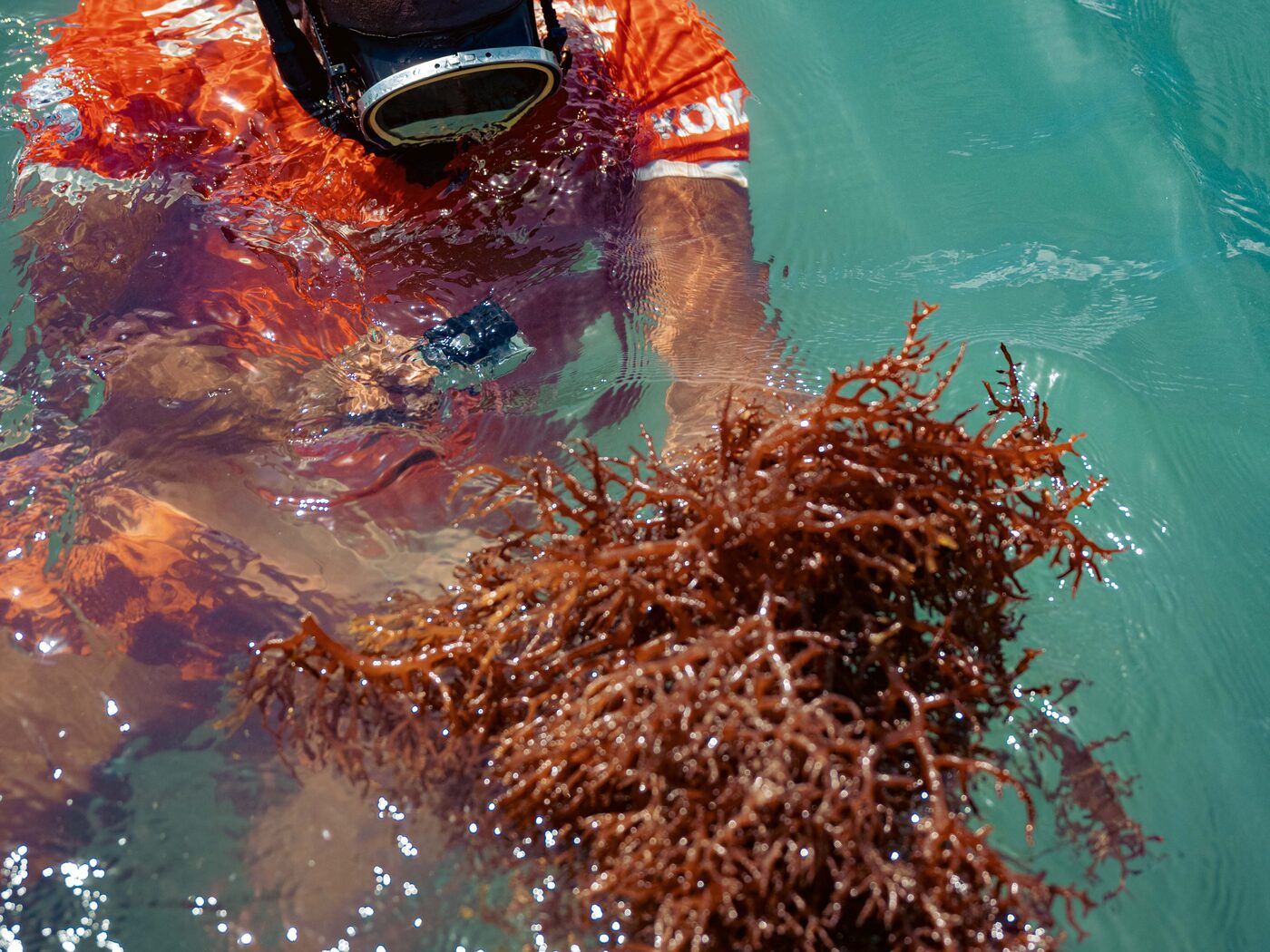
Wildcrafted sea moss, sometimes called wild-harvested, is gathered by hand from the ocean where it grows naturally along the coastline. Nobody planted it and nobody fed it. It grew on its own in moving seawater, through tides, sun and changing temperatures.
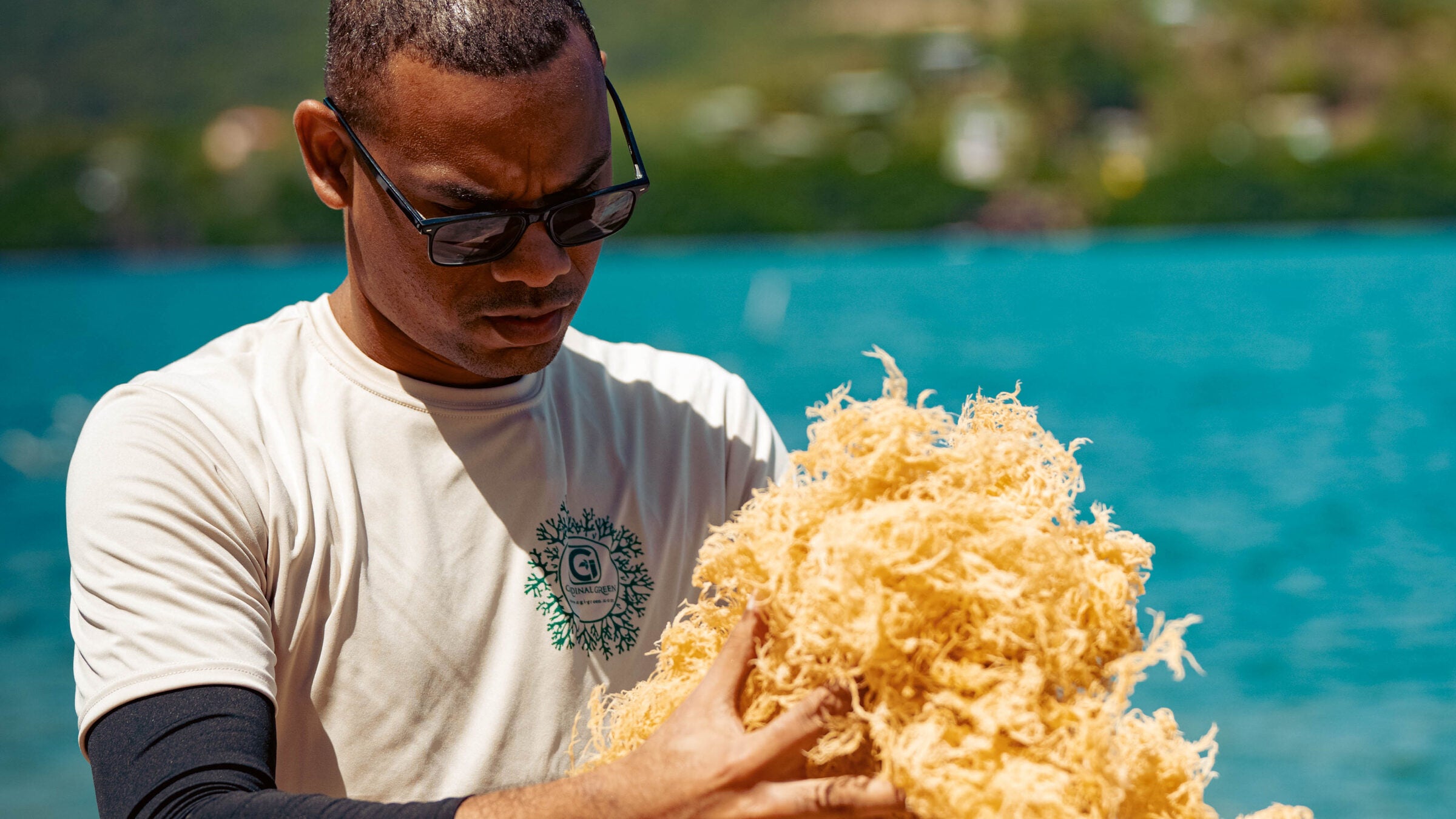
Ours is gathered in the warm waters around St. Lucia and the surrounding Caribbean. Harvesters go into the water and pick it by hand, then it's brought ashore, rinsed with lime and traditionally sun-dried on open racks.
What Is Pool-Grown Sea Moss?
Pool-grown sea moss is exactly what it sounds like. A small amount of sea moss is placed in an artificial environment, a pool, tank or basin, and grown under controlled conditions. It's efficient and it scales. That's why it's everywhere.
The differences that matter to a buyer:
- Water. The open ocean is constantly moving and changing. A pool is a closed body of water, refilled and managed by people.
- What goes in. To make sea moss grow faster in a tank, some growers add nutrients or other inputs. Ask what was used.
- Processing. Some farmed sea moss is bleached so it looks lighter and more uniform.
- Labeling. Most packaging just says "sea moss," so you can't tell which one you're getting unless the brand tells you.
Same name on the shelf, two very different products. That's why the questions below matter.
How to Tell the Difference: The 5-Point Check
None of these is lab proof on its own, but together they tell you a lot. You can do all five at home with dried sea moss.
1. Look at the color
Wildcrafted: varies naturally: gold, tan, purple, reddish-brown. No two pieces look exactly alike.
Often pool-grown or processed: very uniform, pale or bright white. If every strand in the bag looks identical, ask questions.
2. Smell it
Wildcrafted: smells of the ocean, a light briny scent.
Often pool-grown or processed: little to no smell, or a chemical, chlorine-like smell.
3. Feel the texture
Wildcrafted: firm when dry, irregular shapes and thicknesses, tangled, like it was pulled from rocks.
Often pool-grown: very thick, uniform strands that look like noodles.
4. Check the salt
Wildcrafted: light, natural salt crystals that rinse off easily.
Worth questioning: moss so heavily coated in salt that it looks frosted.
5. Watch how it soaks
Wildcrafted: expands well when soaked and blends into a thick gel.
Worth questioning: moss that falls apart quickly and gives a thin, watery gel.
Wildcrafted vs Pool-Grown at a Glance
| What to check | Wildcrafted | Pool-grown |
|---|---|---|
| Where it grows | Open ocean, along the coastline | Pools, tanks or basins |
| How it's gathered | By hand, where it grows | Farmed and harvested from the tank |
| Color | Natural variation | Often uniform or bleached |
| Smell | Light ocean scent | Little or none |
| Supply | Weather-dependent and limited | Year-round, at scale |
| Price | Higher | Lower |
Why Is Pool-Grown Sea Moss Everywhere?
Simple: it's cheaper and faster to produce. Wildcrafted sea moss depends on the weather and the sea, and it has to be gathered by hand by people who go into the water. The supply is naturally limited.
Pool-grown sea moss can be produced in almost any location, all year, at large scale. When demand took off, wild supply couldn't keep up, so farmed moss filled the gap. Most brands don't say which one you're getting.
And Then There's Agar
Some products sold as "sea moss gel" are mostly agar or other gelling agents. Agar is a seaweed-derived gelling agent used in cooking as a vegan gelatin substitute. It sets into a gel that can look a lot like sea moss gel. Read the ingredient list: if sea moss isn't the first ingredient, or isn't there at all, you're buying something else.
What to Look For When Buying Sea Moss
- Ask where it's sourced. A good brand names the country and the coastline. Ours: St. Lucia and the surrounding Caribbean.
- Ask what species it is. Ours is Eucheuma cottonii.
- Ask what it's tested for, product by product. A trustworthy brand gives a specific answer, not just a stamp that says "tested."
- Read the ingredients. Plain sea moss gel should be sea moss and water, sometimes with lime. Flavored gels add fruit. Gums, synthetic preservatives and long lists of additives mean you're buying a flavored gel with sea moss marketing.
- Look at the price. Wildcrafted sea moss costs more to gather. A price far below everyone else's is worth a question.
- Trust your senses. Real sea moss gel has body, slight color variation and a light ocean scent.
The Testing Question
Both wildcrafted and pool-grown sea moss take up what's in the water they grow in. That's part of why people choose sea moss, and it's why where it grew matters.
That makes testing worth asking about. The FDA doesn't approve supplements before they reach shelves, so the questions fall to you: What is this product tested for? By whom? Can I see what the results cover?
Our answer, product by product: our gels and dried sea moss are third-party tested for yeast and mold, and our Moss Bites gummies for yeast and mold and for heavy metals. Here is what the lab checks.
Why This Matters
For many families, sea moss is a daily staple: something they take every morning and share with the people they love. If you're making it part of your routine, you deserve to know where it came from and how it was grown. The industry needs more transparency and less marketing.
Our Position
At CGI-Green, our sea moss is wildcrafted. It is Eucheuma cottonii, hand-harvested in St. Lucia and the surrounding Caribbean, rinsed with lime and traditionally sun-dried, the way our family has prepared it for more than 80 years. Our gels are made from that moss, water, lime and, in the flavored gels, real fruit. No synthetic additives.
We believe the sea moss industry needs more transparency, not more marketing. This article is part of that commitment.
CGI-Green at a Glance
- Who we are: a family-owned, Caribbean-rooted wellness brand with more than 80 years of family tradition behind our sea moss.
- Species: Eucheuma cottonii.
- Where it comes from: wildcrafted and hand-harvested in St. Lucia and the surrounding Caribbean.
- How it is made: rinsed with lime and traditionally sun-dried. No synthetic additives.
- Tested: third-party tested.
- Based in: Florida. Orders ship from our facility in the US.
- Products: sea moss gels, Moss Bites gummies, dried sea moss and capsules.
- Customers: rated 4.9/5 by 18,250+ customers.
We don't tell you it's quality. We show you.
Wildcrafted in St. Lucia. Sun-dried. Third-party tested.
Shop SeaMoss GelsFrequently Asked Questions
What is the difference between wildcrafted and pool-grown sea moss?
Wildcrafted sea moss is gathered by hand from the open ocean, where it grows on its own along the coastline. Pool-grown sea moss is farmed in pools or tanks, which is faster and cheaper, and the label usually doesn't say which one you're buying.
Is pool-grown sea moss safe to eat?
Generally, yes. The questions are about what was added while it grew, how it was processed and whether it was tested. Ask the brand where it was grown and what each product is tested for.
How can I tell if my sea moss is wildcrafted?
Look for natural variation in color and texture, a light ocean smell and a gel with good body. Then ask the brand where it was harvested, what species it is and what it's tested for. A wildcrafted brand can answer all three.
Why is wildcrafted sea moss more expensive?
It is gathered by hand from the ocean, depends on the weather and is limited in supply. Pool-grown sea moss can be produced year-round at scale, which makes it cheaper.
What should sea moss gel ingredients say?
Plain sea moss gel should be sea moss and water, sometimes with lime. Flavored gels add fruit. Gums, synthetic preservatives and long additive lists are a sign you're buying something else.
Where does CGI-Green sea moss come from?
It is Eucheuma cottonii, wildcrafted and hand-harvested in St. Lucia and the surrounding Caribbean, rinsed with lime, traditionally sun-dried and third-party tested.